

Medical Disclaimer:
The information provided in this blog post is intended for general knowledge and informational purposes only, and does not constitute medical advice. It is essential to consult with a qualified healthcare professional for any health concerns or before making any changes to your health or diet.
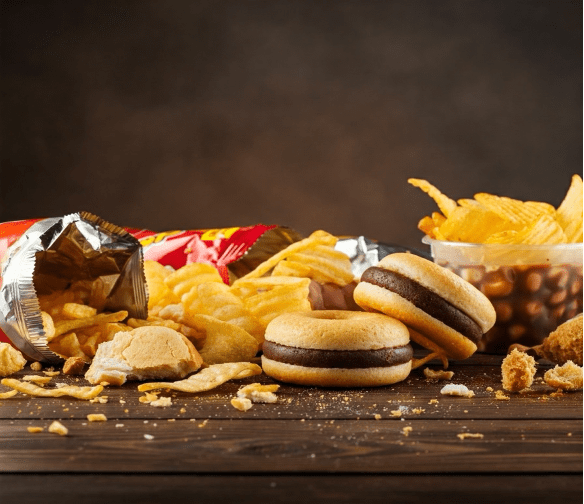
Eating healthy is hard, and for many people it’s too expensive. Ultra-processed foods, or UPFs, are cheap to produce, convenient and plentiful. Who doesn’t like a chocolate doughnut or a steaming bowl of Mac and Cheese right? But while they are convenient and tasty, mounting evidence reveals possible devastating effects on gut health. In fact, UPFs are scientifically engineered to taste good and leave us wanting more. As Dr. Chris van Tulleken, author of Ultra-Processed People, starkly notes: “It’s not food. It’s an industrially produced edible substance” [7][9]. Let’s learn how these foods harm your gut health and what you can do about it.
How Do UPFs Harm Your Gut?
1. Damage to the Gut Lining
UPFs often contain emulsifiers like carboxymethylcellulose and polysorbate-80, which studies show increase intestinal permeability (“leaky gut”) and trigger inflammation [1][4]. Dr. Dariush Mozaffarian, a cardiologist and nutrition expert, explains: “Emulsifiers and stabilizers are added to UPFs for shelf life and texture, but their long-term effects on gut health remain poorly understood”[3]. This damage allows toxins to enter the bloodstream, raising risks for chronic diseases like inflammatory bowel disease (IBD) and colorectal cancer [1][4].
2. Disrupting the Microbiome Balance
UPFs’ high sugar and low fiber content starve beneficial gut bacteria while feeding harmful strains. A 2024 review in Nutrients found that UPF-heavy diets reduce Ruminococcus and Lachnospira species (linked to plant-based diets) and boost Prevotella (associated with inflammation) [2]. Dr. Gerard Mullin of Johns Hopkins warns: “A poor microbiome can lead to systemic inflammation, which underpins everything from obesity to autoimmune disorders”[5].
3. Reducing Microbial Diversity
A diverse gut microbiome is critical for immunity and metabolism, but UPFs strip away the nutrients needed to sustain it. Research links low microbial diversity to higher risks of IBS, diabetes, and depression [1][4]. “Ultra-processing destroys the food matrix, removing trace nutrients and fiber that feed good bacteria,” says Dr. Mozaffarian[3].
Signs Your Gut May Be in Trouble
– Frequent bloating, gas, constipation, or diarrhea
– Fatigue, brain fog, or mood swings
– Skin conditions like eczema or acne
– New food sensitivities
Repairing the Damage: Expert-Backed Strategies
1. Reduce Ultra-Processed Foods
– Read labels: Avoid ingredients like “flavors,” “emulsifiers,” or “modified starches”[7].
– Swap UPFs for whole foods: Choose oats over sugary cereals, or nuts over packaged snacks [3][8].
2. Boost Fiber Intake
Aim for 30g of fiber daily from:
– Legumes, berries, and leafy greens.
– Whole grains like quinoa or brown rice.
“Fiber is the cornerstone of a gut-friendly diet,” emphasizes Dr. Mullin [5].
3. Embrace Fermented Foods
– Kefir, kimchi, sauerkraut, and yogurt replenish probiotics.
– Studies show fermented foods improve gut barrier function and reduce inflammation [5][6].
4. Consider Targeted Supplements
– Probiotics: Look for strains like Lactobacillus and Bifidobacterium [6].
– Glutamine and curcumin: Shown to repair gut lining and reduce inflammation [6].
– Vitamin D: Low levels correlate with leaky gut and dysbiosis [6].
5. Adopt a Mediterranean Diet
Rich in olive oil, fish, and vegetables, this diet is linked to higher microbial diversity and lower UPF reliance [4][8].
Action Steps to Reclaim Your Gut Health
1. Start small: Replace one UPF snack daily with fruit or nuts.
2. Try a 7-day UPF detox: Focus on whole foods and fermented options.
3. Track symptoms: Use a food diary to identify triggers. “The convenience of UPFs comes at a cost,” warns van Tulleken. “But by prioritizing real food, we can rebuild our gut health—and overall vitality”*[7][9]. By understanding the science and taking proactive steps, you can transform your gut—and your health—one meal at a time.

Resources to Consider
– Books: Ultra-Processed People by Chris van Tulleken (science-backed insights into UPFs)
– Free Guide: Johns Hopkins’ *5 Ways to Support Gut Health.
– Supplements: Amen Leaky Gut Supplement – Advanced Formula
– Probiotics: Ora Organic Prebiotic and Probiotic Powder Supplement
AI Usage Disclosure:
This article was written using an AI language model for research and outlining. It was then rewritten and edited by a human to ensure accurate information.
Amazon Affiliate Disclaimer:
As an Amazon Associate, I may earn a small commission from qualifying purchases, at no additional cost to you.
Citations:
[1] https://pubmed.ncbi.nlm.nih.gov/38388570/
[2] https://www.news-medical.net/news/20240603/Do-ultra-processed-foods-alter-the-gut-microbiome.aspx
[4] https://www.wisediet.co.uk/gut-news/are-ultra-processed-foods-dangerous-for-our-gut-health
[6] https://drruscio.com/best-gut-health-supplements/
[7] https://www.goodreads.com/work/quotes/96035220-ultra-processed-people
[9] https://www.goodreads.com/author/quotes/7994882.Chris_van_Tulleken
[10] https://www.yalemedicine.org/news/ultraprocessed-foods-bad-for-you
[11] https://www.mdpi.com/2072-6643/17/1/2
[13] https://www.businessinsider.com/ultra-processed-food-expert-tips-for-avoiding-the-worst-2025-1
[15] https://pubmed.ncbi.nlm.nih.gov/38388570/
[16] https://www.piedmont.org/living-real-change/10-tips-for-a-healthier-gut
[17] https://www.womenshealthnetwork.com/digestive-health/best-supplements-vitamins-for-gut-health/
[18] https://zoe.com/learn/what-is-ultra-processed-food
[19] https://www.hope-health.org/2024/11/08/tips-to-improve-your-gut-health-community/
 lifetransformation.shop
Leave a comment