

For years, depression was framed as a purely chemical imbalance — something happening only in the brain. But a revolution has been unfolding in psychiatry and neuroscience. Experts are now exploring an unexpected ally in mental health: the trillions of microorganisms living in your gut.
This microbial community, known as the gut microbiome, helps digest food, regulate the immune system, and produce crucial molecules like serotonin and dopamine — the same neurotransmitters that influence mood and emotional balance. Emerging studies suggest that when the microbiome falls out of balance, mood often follows.
A 2024 review in Frontiers in Psychiatry described how changes in gut bacteria appear to mirror the biological patterns seen in depression (Frontiers in Psychiatry, 2024). Another meta-analysis published in Nature Translational Psychiatry found consistent differences in gut microbiota composition among thousands of participants worldwide (Nature Translational Psychiatry, 2023).
“In other words, the link between food, microbes, and mood is no longer speculation — it’s measurable.”
This article explores what researchers are discovering about the gut–brain connection, why diet matters, and how this new science could reshape how we think about depression.
THE SCIENCE: A CONVERSATION BETWEEN GUT AND MIND
Scientists have long known that the gut and brain talk to each other — but only recently have they begun to understand the complexity of that dialogue. The gut sends signals to the brain through nerves, hormones, and immune pathways, and the brain returns the favor by influencing digestion and microbial balance. Together, this two-way system is called the gut–brain axis.
A. How Gut Bacteria Influence Mood
About 90% of the body’s serotonin — often called the “feel-good” chemical — is made in the digestive tract. Gut microbes help regulate how much tryptophan (an amino acid from food) becomes serotonin. When microbial balance shifts, so does this biochemical traffic.
Certain bacteria also produce short-chain fatty acids (SCFAs) like butyrate, which strengthen the gut lining and reduce inflammation. That’s important, because chronic inflammation has been linked to depressive symptoms and cognitive decline.
A 2021 PubMed review on psychiatric disorders and gut microbiota reported that people with depression often have lower levels of SCFA-producing bacteria such as Faecalibacterium and Coprococcus, and higher levels of pro-inflammatory species like Eggerthella and Streptococcus (PubMed, 2021). These patterns suggest that gut health may help regulate emotional health.
B. Inflammation, Stress, and the Gut Barrier
When the intestinal barrier weakens — sometimes called “leaky gut” — bacterial fragments can pass into the bloodstream, triggering immune responses that affect the brain. This low-grade inflammation may disrupt neurotransmitter systems and even alter brain structure over time.
Conversely, chronic psychological stress can reshape the microbiome, reducing bacterial diversity and increasing gut permeability. It’s a feedback loop: stress affects the gut, and an inflamed gut can amplify stress and mood changes.
A 2019 Frontiers in Psychiatry review highlighted this bidirectional link, calling the microbiome a “potential mediator of depression’s biological signature” (Frontiers in Psychiatry, 2019).
C. How Psychiatrists Are Studying It
To decode this gut–brain connection, researchers analyze biological samples — including stool — to identify bacterial patterns associated with depression. These analyses don’t aim to shock; they help map the ecosystem inside us. By studying microbial DNA, scientists can detect which bacteria flourish or falter when mood disorders appear.
The findings are consistent: depressed individuals tend to have lower microbial diversity and fewer anti-inflammatory bacteria. Understanding these patterns could one day help psychiatrists personalize treatments, blending traditional therapy with microbiome-supportive nutrition.
THE MEDITERRANEAN DIET CONNECTION
A. Why What You Eat Shapes How You Feel
If gut bacteria influence mood, then diet becomes one of the most powerful — and practical — tools we have. That’s where the Mediterranean diet stands out.
This way of eating, common in coastal regions of Italy, Greece, and Spain, is rich in vegetables, fruits, whole grains, legumes, nuts, olive oil, and fish. It’s low in processed foods and sugars — the very elements that disrupt microbial balance.
A 2025 review in the International Journal of Molecular Sciences found that the Mediterranean diet’s blend of fiber, healthy fats, and antioxidants supports a diverse gut microbiome and reduces inflammation linked to depression (MDPI, 2025).
Here’s how it works in plain language:
Fiber feeds beneficial bacteria that produce SCFAs, which protect the brain.
Polyphenols in olive oil, red grapes, and herbs act like fertilizer for “good” microbes.
Omega-3s from fish and nuts soothe inflammation throughout the body.
Together, these effects strengthen the gut–brain axis and may buffer against mood disorders.
B. Evidence Linking Diet and Depression
Across multiple studies, people who closely follow a Mediterranean-style diet show up to a 67% lower risk of developing depression compared to those who don’t (PubMed, 2025). Trials involving over 45,000 participants found that this diet improves depressive symptoms and overall well-being.
A 2024 Frontiers in Nutrition review suggested that these mood benefits likely come from changes in the microbiome — more bacterial diversity, greater production of anti-inflammatory compounds, and better gut barrier function (Frontiers in Nutrition, 2024).
Simply put: the foods that keep your gut healthy also help your brain feel balanced. The Mediterranean diet isn’t a cure, but it’s a sustainable, research-backed lifestyle that supports both gut and emotional resilience.
THE TRIANGLE OF CONNECTION: DIET, GUT, AND MIND
Think of your health as a three-way conversation:
- The Brain — processes emotions, stress, and thought patterns.
- The Gut — produces molecules that influence brain chemistry.
- The Diet — feeds or starves the microbes that shape this entire dialogue.
When one side of this triangle falters, the others respond. Depression can slow digestion and alter gut bacteria. In turn, those changes can increase inflammation or reduce beneficial neurotransmitters, deepening low mood.
Psychiatrists and nutrition scientists are now exploring how to gently rebalance this system.
Probiotics (living bacteria) and prebiotics (fibers that feed them) are being studied as adjunct therapies for depression.
Personalized nutrition — based on an individual’s microbiome — may someday guide mental health care.
Dietary interventions like the Mediterranean pattern show measurable benefits in mood and cognition.
A 2024 International Microbiology paper described this approach as “psychiatry’s next frontier” — a model that blends biological and behavioral health (Springer, 2024).
PRACTICAL TAKEAWAYS
A. What the Research Suggests
- Eat the Mediterranean way. Prioritize colorful plants, whole grains, legumes, nuts, fish, and olive oil.
- Vary your meals. Different fibers feed different microbes — variety equals diversity.
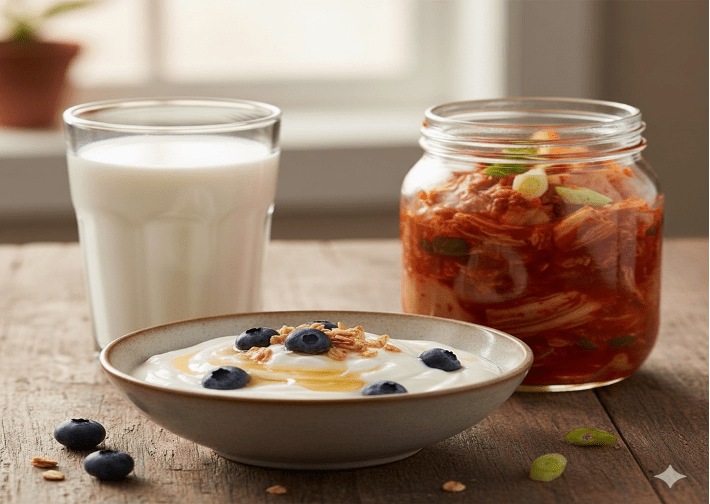
- Include fermented foods. Yogurt, kefir, and kimchi introduce beneficial bacteria.
- Limit ultra-processed foods. They disrupt microbial balance and raise inflammation.
- Be patient. Microbiome shifts take weeks, not days. Sustainable habits matter more than quick fixes.
B. Important Caveats
Microbiome science is young and still evolving. No two guts are alike, and what helps one person may not help another.
If you’re managing depression, view diet as only one supportive tool among many. Maintain your current treatment plan, and talk with your healthcare provider before adding supplements or changing medication.
Emerging evidence suggests that small dietary changes can support emotional well-being — but professional care, therapy, and community remain at the heart of healing.
CONCLUSION
For now, the message is hopeful but humble: while diet and microbiome research can’t replace therapy or medication, they can powerfully complement them. Food isn’t a cure, but it’s a conversation starter between your body and your mind.
AFFILIATE LINKS:
Top-selling Cookbook: The Complete Mediterranean Cookbook
How to Ferment Vegetables: Fermented Vegetables, 10th Anniversary Edition
The Gut-Brain Paradox: Improve Your Mood by Dr. Steven R Gundry
Recommended Probiotics: Physician’s Choice Probiotics 60 Billion CFU
DISCLAIMERS
Medical Disclaimer:
This article is for informational purposes only and is not a substitute for professional medical advice, diagnosis, or treatment. Always consult your physician or qualified health provider with any questions about depression, mental health, or diet.
Affiliate Disclaimer:
This article may contain affiliate links, meaning we could earn a small commission if you purchase through them, at no additional cost to you. We only recommend products consistent with the evidence presented.
AI Usage Disclaimer:
Portions of this article were written with AI assistance to help synthesize research findings. They were then human-edited to ensure accuracy. All scientific information has been verified through peer-reviewed sources.
 lifetransformation.shop
Leave a comment