
Discover what experts say about the gut–brain connection — and how small, smart food choices can help first responders, nurses, and shift workers feel human again
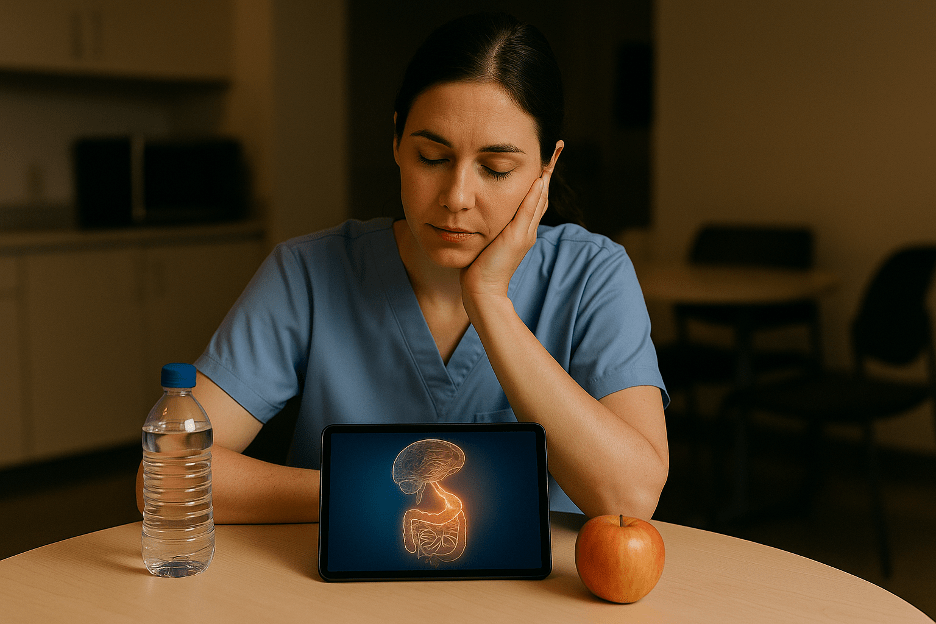
Finishing a long night shift can leave your body drained and your mind racing, especially when you’re grabbing a snack from the vending machine at 3 a.m. and attempting to sleep while everyone else starts their day. For nurses, EMTs, firefighters, and other shift workers whose routines don’t fit the typical 9-to-5 lifestyle, this out-of-sync schedule affects more than just sleep—it can throw off your gut’s internal clock too. When that happens, the vital connection between your gut and brain suffers, impacting your mood, energy, digestion, and overall resilience.
The Mind-Gut Connection for High-Stress Professionals
The “gut–brain axis” is the two-way communication system between your digestive system and your brain, mediated by microbes, hormones, the immune system and nerve pathways. (Physiology Journals) When you mix shift work, irregular eating, high adrenaline and sleep disruption, the system can wobble.
Recent research highlights that night or rotating shifts are linked with changes in gut microbial diversity and composition. For example, a 2025 systematic review found that shift work is associated with “reduced α-diversity and increased relative abundance of pro-inflammatory genera” in your gut microbiota. (MDPI) Another study showed that microbial activity might modulate stress-responsivity (HPA-axis regulation) directly, meaning your gut may influence how your body reacts to high-pressure shifts. (Cell)
What this means: when your internal clocks, meals and sleep are out of harmony, your gut and brain pay the price.
What Stress, Shift-Work & Unhealthy Eating Do to Your Gut and Mood
High-stress professions carry multiple risk factors: elevated cortisol, erratic breaks, quick convenience foods, caffeine overload, and fragmented sleep. These all feed into gut troubles.
- Circadian misalignment – When food timing, light exposure and sleep are adrift, gut motility, barrier integrity and microbiota function suffer. (Taylor & Francis Online)
- Diet quality drop – Grab-and-go snacks, low fiber, high processed foods. Poor diet quality links with higher risk of depression and mood disorders. (Cureus)
- Gut barrier & inflammation – Dysbiosis (microbial imbalance) may prompt “leaky gut,” low-grade inflammation and altered signaling to the brain. (MDPI)
That’s you. You work when others sleep — you need a system that works with your rhythm, not against it.
What the Research Says Works
Good news! You don’t need a diet overhaul. You need smart, targeted strategies that work for your schedule.
- Dietary pattern strikes: A Mediterranean-style diet (high in fibre, vegetables, legumes, healthy fats) supports mood and gut health. One review notes: “Dietary choices significantly influence the gut microbiome, thereby affecting emotional, cognitive, and neurological health.” (Cureus)
- Meal timing matters: Because your gut has its own rhythms, aligning eating windows with your shift schedule helps. Patterns like limiting late-night heavy meals and aligning hydration + caffeine with shift cycles support the gut–brain axis.
- Hydration, caffeine & snack strategy: Proper hydration and timed caffeine (rather than constant use) matter for gut motility and mental clarity — yes, your toolkit has this built in.
- Prebiotic + fiber focus: Foods high in prebiotic fiber (onions, garlic, oats, beans) support beneficial microbes and microbial metabolites like short-chain fatty acids (SCFAs) that signal the brain.
- Low-FODMAP option: For those with gut symptoms (bloating, IBS) working shifts, a guided Low-FODMAP trial may help. I’m offering a free Low-FODMAP Traffic-Light Chart as an easy download below.
Practical Guide for You: Shift-Life Wellness
Here’s how to put it into action — simply plug into your schedule.
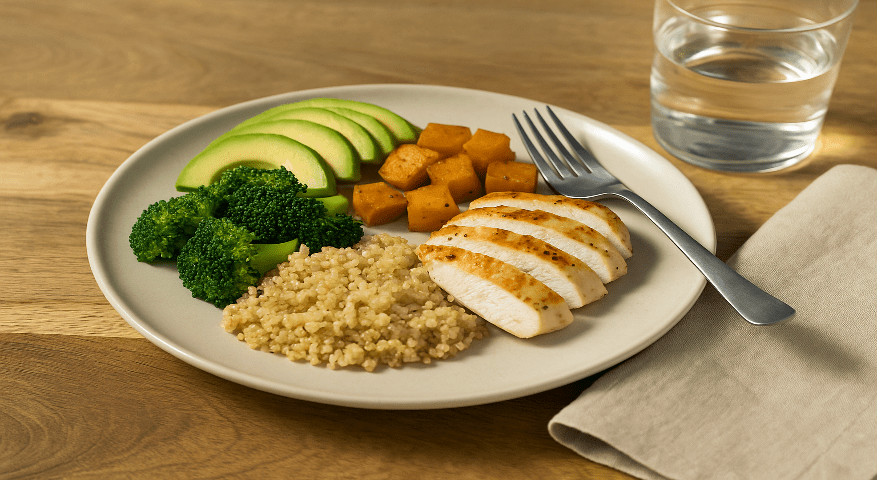
Realistic Weekly Menu Sample (for shift-workers)
| Day | Meal 1 (pre-shift) | Meal 2 (mid-shift) | Meal 3 (end-shift) | Snack / Hydration |
| Mon | Overnight oats + berries | Whole-grain wrap + greens | Grilled salmon + sweet potato | Almonds + water |
| Tue | Greek yoghurt + flaxseed | Chickpea salad + olive oil | Stir-fry veg + tofu | Apple slices + herbal tea |
| Wed | Smoothie (spinach, banana, protein) | Quinoa + roasted veggies | Turkey chili + beans | Carrot sticks + hummus |
| Thu | Omelette + spinach | Lentil soup + whole-grain roll | Baked cod + broccoli | Mixed nuts + sparkling water |
| Fri | Porridge + cinnamon | Whole-wheat pita + falafel | Steak + salad + avocado | Dark chocolate + water |
(Use your Meal Clock, Grocery Checklist and Caffeine & Hydration Guide from the Shift-Start Gut-Check Toolkit to tailor your timing and portion size.)
Quick Wins
- Pre-shift “anchor” meal – Eat 1–2 hours before your shift starts, favoring fiber + lean protein.
- Mid-shift maintenance snack – Balanced carb + protein + fiber, not sugary crash fuel.
- Hydration rule – Drink ~250 mL every hour when awake; avoid loading caffeine in the final two hours.
- End-shift “recovery” meal – Moderate size, higher in veggie fiber, lower in heavy fats.
- Rest & reset window – Use the toolkit’s color-coded clock system to align eating windows with your sleep/rest cycle.
Take Action & Empower Yourself
You spend your days holding everything together—work, responsibilities, deadlines.
This toolkit is for you.
The Gut Health Productivity Toolkit is designed for busy professionals who want steadier energy, clearer focus, and fewer crashes—without overhauling their entire life.
👉 Get the Gut Health Productivity Toolkit (printable + GoodNotes-ready)
A practical, non-medical system to help you align food timing, focus, and recovery in real life:
https://www.etsy.com/listing/4420316501/gut-health-productivity-toolkit-for-busy?ref=listings_manager_grid
You don’t need a perfect schedule.
You need better support.
One steady meal, one smart snack, one intentional reset at a time—you can build resilience, clarity, and balance that actually lasts.
✅ Disclaimers
Medical/Health Disclaimer: This article is for informational purposes only and is not intended to diagnose, treat, cure or prevent any disease. Please consult a qualified healthcare provider or registered dietitian before making major dietary changes, especially if you have IBS, IBD, pregnancy, or other chronic conditions.
Affiliate Disclaimer: Some links in this article are affiliate links. If you purchase through them, I may earn a small commission at no extra cost to you.
AI/Content Disclaimer: This article was drafted with the assistance of AI tools and finished by human editing. All facts and references have been verified to the best of our ability.
References
- Grasa-Ciria D, Couto S, Samatán E, et al. Disrupted Rhythms, Disrupted Microbes: A Systematic Review of Shift Work and Gut Microbiota Alterations. Nutrients. 2025;17(17):2894. https://doi.org/10.3390/nu17172894 (MDPI)
- Tofani GSS, et al. Gut Microbiota Regulates Stress Responsivity via the HPA-axis. Cell Metabolism. 2025;… https://doi.org/10.1016/j.cmet.2024.xx.xxx (Cell)
- Foster JA, Neufeld KM. Stress & the gut–brain axis: Regulation by the microbiome. Neurobiology of Stress. 2017; https://doi.org/10.1016/j.ynstr.2016.06.003 (sciencedirect.com)
- [etc.]
 lifetransformation.shop
Leave a comment